
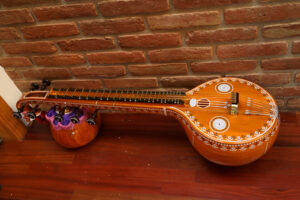
Introduction to Veena Instrument Techniques
The veena, an ancient Indian string instrument, is renowned for its majestic sound and cultural significance. To master this exquisite instrument, one must hone a combination of technical prowess, emotional expression, and disciplined practice. Veena instrument techniques form the backbone of a musician’s ability to create melodious music while maintaining the instrument’s authenticity and versatility. This article delves into eight essential skills every veena player must develop to excel in their craft.
1. String Plucking Technique
The first and most fundamental skill in veena playing is mastering string plucking. This involves striking the strings with the right-hand fingers using a metal plectrum (known as a “mizrab” or “meku”). Precision in plucking is crucial to produce clear, resonant tones. Beginners should focus on:
- Maintaining a consistent rhythm.
- Adjusting plucking strength for dynamic variations.
- Alternating between the melodic and drone strings to enhance the composition.
Advanced players often explore speed variations and intricate patterns. Perfecting this technique lays the groundwork for many veena instrument techniques that follow.
2. Fingering on the Fretboard
The left hand maneuvers the notes on the fretted neck of the veena, ensuring the accuracy of pitch and ornamentation. Key aspects of this skill include:
- Proper finger placement to avoid buzzing sounds.
- Smooth transitions between notes for fluidity.
- Mastering “gamakas” (ornamental oscillations) for emotional depth.
Practicing scales and ragas repeatedly helps players refine this technique. A strong command over the fretboard enhances the overall performance, making it an indispensable veena instrument technique.
3. Mastering Gamakas
“Gamakas” are embellishments that bring life to the veena’s music, making it distinctively Indian. These oscillations, slides, and bends require a combination of plucking and left-hand dexterity. Common types of gamakas include:
- Kampitam: Oscillating a note up and down.
- Jaru: Sliding between notes seamlessly.
- Moorchana: Producing rapid oscillations.
The ability to execute gamakas effectively depends on disciplined practice and a deep understanding of the raga. A veena player’s proficiency in gamakas sets them apart, highlighting their command of veena instrument techniques.
4. Coordinating Both Hands
One of the most challenging aspects of playing the veena is achieving synchronization between the right and left hands. While the right hand focuses on rhythm and plucking, the left hand determines pitch and ornamentation. This coordination requires:
- Developing muscle memory for complex passages.
- Practicing slow tempos to ensure precision.
- Gradually increasing speed without sacrificing clarity.
Advanced coordination enables veena players to tackle intricate compositions, showcasing their mastery of multiple veena instrument techniques simultaneously.
5. Tempo Control and Rhythm Mastery
A veena performance is incomplete without impeccable rhythm and tempo control. This involves maintaining a steady pace while adapting to the composition’s requirements. Key practices include:
- Using a metronome during practice.
- Understanding and executing various “talas” (rhythmic cycles).
- Experimenting with tempo changes to enhance musical expression.
Mastery of rhythm allows players to add depth and complexity to their music, making tempo control a vital veena instrument technique.
6. Developing Tone Sensitivity
The veena’s tonal quality is unique, and every player must learn to harness its full potential. Achieving the desired tone involves:
- Adjusting plucking pressure for softer or louder notes.
- Balancing the volume between melodic and drone strings.
- Experimenting with string tension and hand positioning.
Sensitivity to tone helps veena players connect with their audience emotionally, emphasizing the spiritual essence of the instrument. This makes tone control one of the most nuanced veena instrument techniques.
7. Improvisation in Ragas
Improvisation is an integral part of Indian classical music, and the veena offers ample scope for creative expression. To excel in this skill, veena players must:
- Internalize the structure and mood of the raga.
- Experiment with phrases and patterns within the raga’s framework.
- Seamlessly incorporate gamakas and rhythmic variations.
Improvisation allows musicians to personalize their performances, making it a hallmark of advanced veena instrument techniques.
8. Stage Presence and Performance Skills
Beyond technical proficiency, a veena player must develop stage presence to captivate their audience. This involves:
- Maintaining poise and confidence during performances.
- Engaging the audience through expressive playing.
- Adapting to unforeseen challenges, such as string breakage or acoustics issues.
Mastering stage performance ensures that all veena instrument techniques are presented in their full glory, leaving a lasting impression on listeners.
Tips for Practicing Veena Instrument Techniques
- Daily Practice: Dedicate time to each technique for consistent improvement.
- Seek Guidance: Learn from experienced gurus to gain deeper insights.
- Record and Reflect: Listening to your practice sessions helps identify areas for improvement.
- Study Masters: Observe performances by renowned veena players for inspiration.
Conclusion
The veena is more than just a musical instrument; it is a conduit for emotional and spiritual expression. By mastering these eight essential skills, veena players can unlock the instrument’s full potential and create music that resonates deeply with their audience. Whether you are a beginner or an advanced player, continuous learning and dedication to veena instrument techniques will ensure a fulfilling musical journey.


