SWOT Analysis Models help organizations understand where they stand and what strategic choices allow them to move forward. This article explores structured approaches to internal strengths and weaknesses, as well as external threats and opportunities, while showing how different models expand the basic SWOT into deeper, practical decision-making tools.
By applying structured variants of SWOT, leaders can make better decisions, anticipate change, learn from competitors, and align resources with the real market landscape. Each model has unique strengths, and understanding them provides a foundation for choosing the right approach for your context.
1 – Classic SWOT Analysis
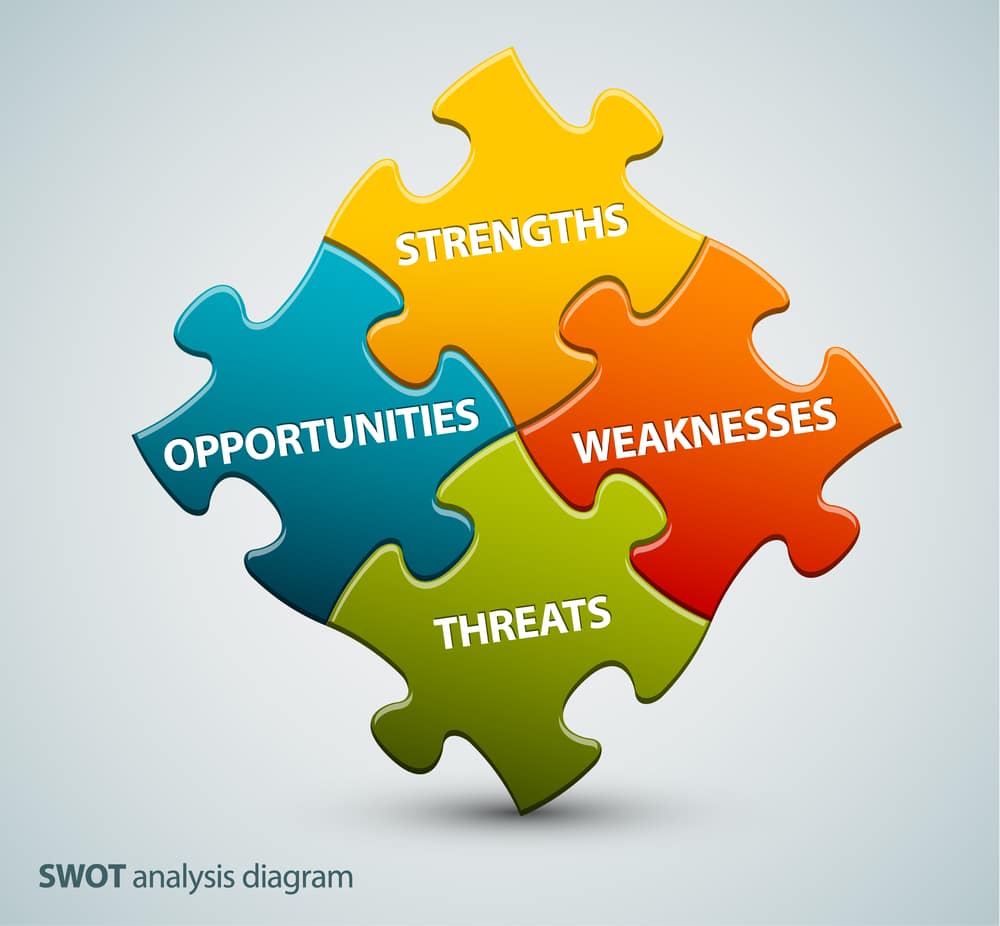
SWOT Analysis Models begin with the familiar matrix evaluating strengths, weaknesses, opportunities, and threats. The classic version provides clarity by simplifying a business situation into four focused quadrants. It emphasizes balance: what you do well versus what you must improve, and what opportunities or external risks shape the future. Because it is accessible and adaptable, classic SWOT remains the most widely used strategic model in business planning, education, and market evaluation.
However, its simplicity can also be a limitation. Without deeper analysis, action steps may rely too heavily on subjective opinions. Teams may overlook emerging threats or underestimate future opportunities. SWOT is strongest when paired with customer data, competitor insights, and realistic performance metrics.
2 – TOWS Matrix
This variation of SWOT Analysis Models expands the classic matrix into four strategic pathways: Strength-Opportunity strategies that accelerate advantage, Strength-Threat strategies that protect gain, Weakness-Opportunity strategies that build capabilities, and Weakness-Threat strategies that minimize risk. Instead of listing elements, TOWS pushes organizations to create actionable pairings.
Teams often use TOWS when strategic focus is needed. It bridges analysis and execution by transforming the earlier observations into directionally correct initiatives: defend, attack, develop, or withdraw. The accuracy of a TOWS plan depends on careful judgment, but when applied rigorously, it turns SWOT into a practical roadmap.
3 – SOAR Analysis
This version of SWOT Analysis Models substitutes weaknesses and threats with aspirations and results. Instead of focusing on what is broken, SOAR concentrates on what the organization wants to become. Strengths remain important, and opportunities are still essential, but now the emphasis is on possibility and measurable outcomes.
The SOAR model is common in organizational development where motivation, inclusion, and transformation matter. It shifts leadership conversations into future-building mode. Teams still need to remain aware of vulnerabilities, but SOAR empowers creativity and can boost morale when a company needs a positive change.
4 – Strategy Canvas with SWOT Overlay
Here, SWOT Analysis Models intersect with value-curve mapping. By charting performance factors against competitors, organizations visualize where they differentiate or lag. The SWOT overlay is applied after the visualization reveals the strongest and weakest points on the curve so teams can categorize them into strategic drivers.
This combination is useful in highly competitive markets where differentiation is critical. The clarity of the curve helps avoid blind spots. Results depend on accurate competitor benchmarking, and companies may need market research to avoid assumptions, but this model provides actionable clarity for repositioning, innovation, or pricing strategy.
5 – PEST-Driven SWOT
This variation of SWOT Analysis Models explicitly integrates political, economic, social, and technological assessments into the external half of the matrix. It recognizes that threats and opportunities are shaped by macro-environmental dynamics beyond internal control.
PEST-driven SWOT is particularly valuable for long-term planning or entering new geographic markets. While it deepens context, it also requires data and trend analysis to remain valid. Overcomplication can occur when too many external elements are included, so the key is selecting drivers most relevant to strategy.
6 – Competitive SWOT Benchmarking
Here, SWOT Analysis Models are applied not just to your own organization but also to competitors. With side-by-side matrices, strengths and weaknesses can be compared directly, revealing areas where you outperform rivals—or where they have an advantage.
This approach is essential in fast-moving industries. It prevents strategic decisions from being made in isolation. Still, benchmarking works only when competitor data is accurate and unbiased. Teams must avoid misinformation while leveraging the gaps they identify.
7 – Weighted SWOT
Weighted SWOT Analysis Models assign numerical values to rank each factor’s significance. Strengths and weaknesses receive internal priority scores, while opportunities and threats receive external probability or impact scores. Prioritization turns qualitative brainstorming into a quantitative foundation for strategy.
Weighted SWOT guides investment and resource allocation. It ensures that critical elements receive attention first and helps eliminate noise. However, scoring may still involve subjectivity, so cross-team discussions and data validation are necessary to reduce bias in the weightings.
8 – VRIO-Supported SWOT
This approach blends SWOT Analysis Models with the VRIO framework: value, rarity, imitability, and organization. Strengths are scrutinized to determine whether they are true sustainable competitive advantages or merely baseline competencies. Weaknesses and threats become more visible as gaps compared to valuable, hard-to-copy capabilities.
Organizations use VRIO-supported SWOT when refining differentiation strategy. It connects insights to long-term advantage rather than short-term fixes. The model demands detailed resource analysis, but it helps companies avoid chasing easily imitated improvements.
9 – Digital SWOT with Data-Driven Inputs
This newest version of SWOT Analysis Models uses analytics to score internal and external factors. Automated dashboards track customer sentiment, competitor pricing, operational metrics, and regulatory news. The matrix updates as conditions shift, keeping strategy connected to real-time information.
Digital SWOT helps companies react quickly and test assumptions through evidence instead of guesswork. It does require infrastructure, such as skilled analysts, data governance, and technology investment, but it closes the gap between analysis and action with measurable agility.
External-First SWOT for Market Entry
This approach begins by studying external forces before examining internal capabilities, reversing the typical order used in SWOT Analysis Models. Opportunities and threats provide the early focus so the organization first understands market structure, demand patterns, and competitive forces.
Once external clarity is established, strengths and weaknesses are aligned to the market context. The result is stronger strategic fit. This model is common in expansion decisions, but its accuracy depends on the quality of market data and the organization’s willingness to adjust internal plans to fit external facts rather than internal preferences.
Resource-Gap SWOT
This model asks leaders to categorize internal weaknesses not simply as performance issues but specifically as capability gaps. Because SWOT Analysis Models sometimes overlook nuances in capability maturity, this approach ensures organizations understand which weaknesses prevent them from capturing opportunities or surviving threats.
Resource-gap SWOT enables targeted capability building. It links improvement efforts to the highest-value opportunities rather than general perfectionism. The challenge lies in being brutally honest about where resources are insufficient, especially when emotional or political resistance exists inside teams.
Customer-Centered SWOT
Customer-centered planning challenges organizations to evaluate strengths and weaknesses only through the customer’s viewpoint. While all SWOT Analysis Models include customers indirectly, this version prioritizes customer-perceived value and dissatisfaction before any internal definition of excellence.
It is particularly useful for service businesses and direct-to-consumer brands where customer experience determines competitive advantage. Gathering feedback requires consistent engagement channels such as surveys, community platforms, or user testing. When executed correctly, the resulting strategy becomes more aligned with market expectations and customer loyalty.
How to Build a Useful SWOT Analysis
Here is a straightforward 4-step process:
1. Gather Real Data
Sales reports, surveys, competitive research, industry forecasts — the more factual, the more valuable the analysis.
2. Work With Multiple Departments
Sales, marketing, finance, and operations see very different realities. Bring them together.
3. Keep Each Point Action-Focused
Avoid generic lists like “Branding” or “Competition.” Instead, write specifics such as:
“High customer retention due to personalized onboarding.”
4. Prioritize the Results
Not every weakness matters. Focus on the items that have real business impact.
Real-World SWOT Examples
Here’s how different businesses apply SWOT:
| Type of Business | Strength Example | Weakness Example | Opportunity Example | Threat Example |
|---|---|---|---|---|
| Local Restaurant | Strong community reputation | High ingredient costs | Catering expansion | New franchise opening nearby |
| SaaS Startup | Product solves a unique pain point | Limited marketing budget | Growing demand for automation | Competitor raises VC funding |
| Retail E-commerce Store | Fast shipping fulfillment | Low repeat purchase rate | Subscription-box add-on | Rising ad costs |
These insights help guide decisions like pricing, packaging, partnerships, and new product development.
Turning SWOT Findings Into Strategy
Once the matrix is complete, companies translate insights into action:
| SWOT Outcome | Strategic Action |
|---|---|
| Strength you can double down on | Expand it into more markets |
| Weakness blocking growth | Improve or outsource it |
| Opportunity close to current capabilities | Enter that segment early |
| Threat with high impact | Create mitigation plans now |
A strong SWOT always leads to next steps — otherwise it’s just a meeting note.
Common Mistakes to Avoid
Businesses often weaken the value of SWOT by:
✘ Listing too many vague items
✘ Confusing opinions with facts
✘ Treating SWOT as a one-time exercise
✘ Ignoring external threats until too late
✘ Failing to assign ownership to actions
A SWOT should be reviewed at least quarterly in dynamic markets.
Tools and Templates That Help
You can create a SWOT using:
• Whiteboard or sticky notes during team workshops
• Digital tools like Miro or Notion
• Pre-formatted SWOT templates in PowerPoint or Word
• Competitive data tools for richer insights (e.g., market share analytics)
The best model is the one your team will actually use — consistently.
Final Takeaway
SWOT analysis models help leaders see the truth about their business — the good, the bad, and the risky. When grounded in data and supported with follow-through, SWOT becomes a powerful roadmap for:
• Driving strategic direction
• Identifying tactical priorities
• Improving decision-making speed
• Strengthening competitive advantage
If your business environment is changing — and it always is — SWOT is no longer optional. It’s your lens for staying ahead instead of falling behind.
References
• https://doi.org/10.1016/j.lrp.2017.07.003
• https://doi.org/10.1108/10878570410699859
• https://doi.org/10.1177/1086026615575338


